The Sonoran Desert floor beneath Surprise presents a real challenge when you're planning anything taller than a single-story home. We get expansive clay layers that swell and shrink with monsoon moisture, then just a few feet down you hit cemented caliche that laughs at a standard auger. Designing a pile foundation here means accounting for that drama. It's not just about bearing capacity; it's about isolating your structure from the near-surface shrink-swell cycle that has cracked slabs from El Mirage to Sun City West. For projects near the White Tank Mountain bajadas, we often recommend pairing deep pile systems with a liquefaction assessment to evaluate how saturated silts might behave during a distant seismic event. The design has to anticipate both the dry season's rock-hard crust and the saturated instability that arrives with the summer storms.
In Surprise, the critical design depth is the zone of seasonal moisture fluctuation—usually the top 12 to 18 feet—where expansive soils will work against any shallow foundation.
Technical details of the service in Surprise Arizona
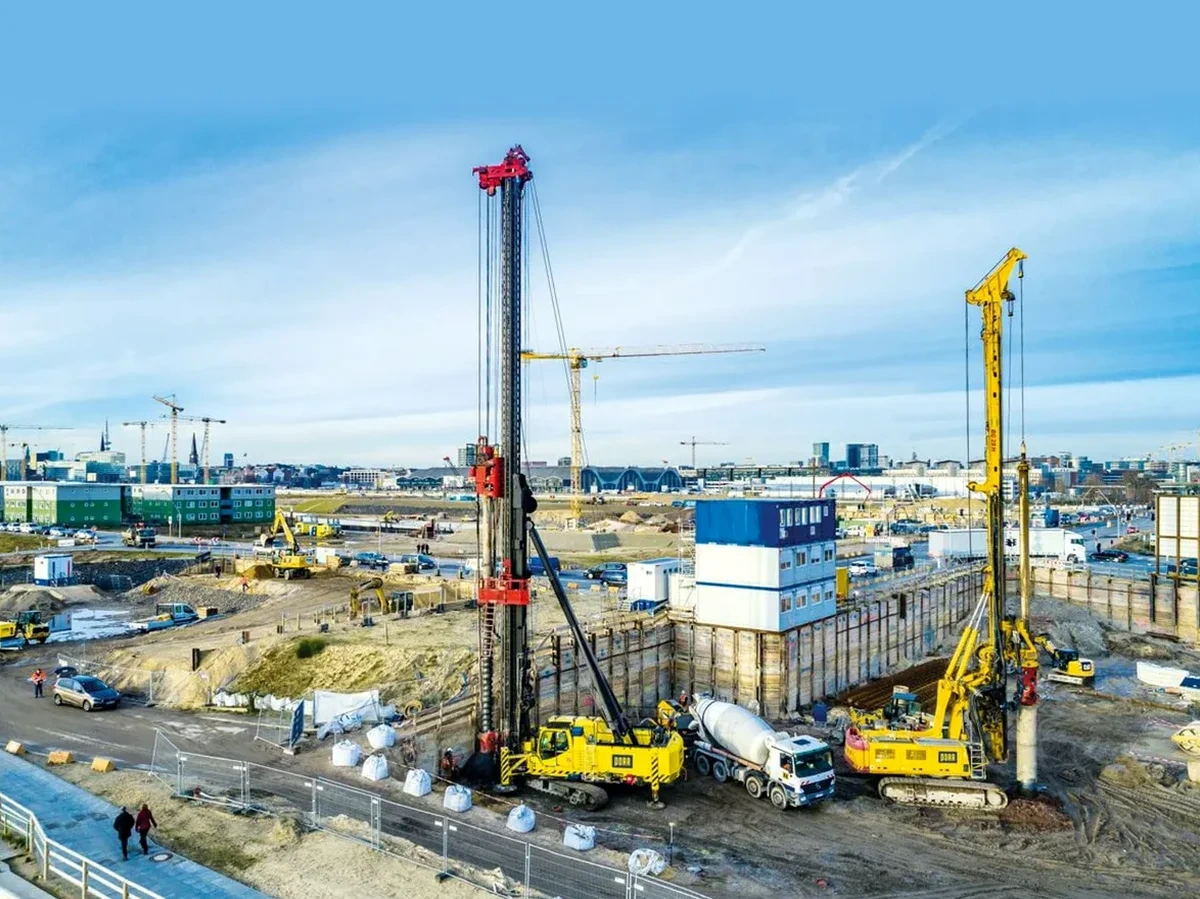
Local geotechnical conditions in Surprise Arizona
A drill rig working a Surprise site kicks up a fine, powdery dust that tells you everything about the soil's water hunger. That same dust is what makes a poorly designed pile system fail. The number one risk we see isn't a sudden collapse; it's differential movement over time. Picture a commercial building where one corner sits on a slightly thicker lens of expansive clay than the other. The pile design has to neutralize that differential heave by transferring loads to a stratum that doesn't move with the seasons. If you underestimate the depth to competent bearing material or ignore the negative skin friction from settling backfill, you'll end up with a structure that slowly tears itself apart. This isn't theory—we've seen the hairline cracks in stucco and the jammed doors that signal a foundation losing its battle with the desert soils.
Our services
Our pile foundation design work in the Surprise area integrates geotechnical exploration with structural demand analysis to deliver a foundation system that fits both the budget and the ground conditions.
Deep Foundation Analysis
We evaluate driven piles, drilled shafts, and helical anchors to determine which system best bypasses the expansive upper soils and reaches the stable basin fill beneath Surprise.
Pile Load Testing Oversight
From static compression tests to high-strain dynamic monitoring, we verify that installed capacity meets the design assumptions and the IBC requirements.
Lateral and Uplift Design
Using LPILE and finite element tools, we model wind and seismic lateral loads to ensure your pile group can handle the desert monsoons and occasional tremors.
Construction Specification Development
We produce clear, defensible specs covering pile tip elevation, minimum penetration into bearing strata, and quality control testing for contractors working in the Surprise market.
Common questions
How deep do piles typically need to go in Surprise?
It depends on the site-specific boring data, but in much of Surprise, we design piles to extend 25 to 40 feet to get past the expansive near-surface clays and seat into dense alluvium or caliche-cemented conglomerate.
What does a pile foundation design package cost for a project in Surprise?
For a standard commercial building with a moderate number of piles, the design and analysis package typically ranges from US$1,460 to US$7,120, depending on the complexity of the loading, the number of borings, and the level of seismic detailing required.
Do I need a special inspection during pile installation?
Yes, IBC Chapter 17 requires special inspection for deep foundation installation. We carry out that observation to confirm the piles reach the specified bearing stratum and are installed per the design documents.
Are helical piles a viable option for Surprise's caliche layers?
Helical piles can work, but the dense caliche layers common in the Surprise area often require higher torque motors and careful selection of helix plates to avoid refusal before reaching the design depth.
How does the expansive soil in Surprise affect pile design differently than in Phoenix?
Surprise sits on older, more cemented basin deposits than parts of central Phoenix, so while the expansion potential is similar, the depth to a reliable bearing layer can be shallower here, which often results in a more economical pile length.