We see it repeatedly across the West Valley: a contractor extends a subdivision into Surprise, copies a standard retaining wall detail from a Phoenix project, and six months later the wall is leaning. The culprit is rarely the wall itself. It is the assumption that soil behaves the same 10 miles west. Surprise sits on a complex mix of Quaternary alluvium, fine-grained desert deposits, and—critically—collapsible silty sands that lose structure when wetted. A retaining wall design here cannot rely on textbook bearing values. It demands site-specific exploration, lab testing for collapse potential per ASTM D5333, and a drainage strategy that accounts for monsoon flash runoff across the McMicken Dam watershed. Before you pour, verify. Our geotechnical team starts with a test pits program to expose the actual stratigraphy, then couples it with lab index work to calibrate lateral earth pressures for the real soil profile—not the one you hope is there.
Collapsible silty sand can lose 10% of its height under saturation—a mechanism that turns a code-compliant wall into a liability if drainage isn't absolute.
Technical details of the service in Surprise Arizona
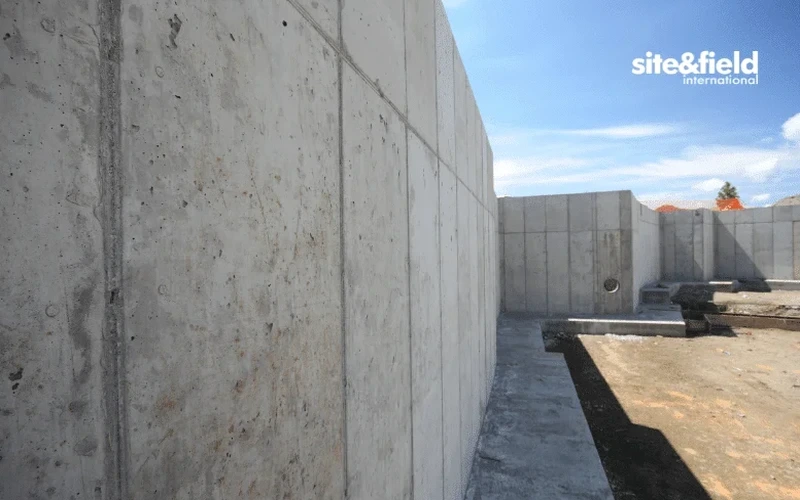
Local geotechnical conditions in Surprise Arizona
The White Tank Mountains to the west shed coarse sediments onto the basin floor, but the fine fraction—silts and clayey silts deposited by ephemeral streams—creates the real hazard: hydrocompaction. When irrigation, monsoon infiltration, or a broken utility line saturates these soils, the ground can settle abruptly, pulling the wall footing down with it. We've measured collapse strains exceeding 6 percent in undisturbed samples from sites near Bell Road. That magnitude of differential movement is enough to crack a masonry wall stem and separate it from the footing. The fix is not a heavier wall; it is pre-wetting, over-excavation, or a structural connection designed to tolerate some rotation. Seismic demand adds another layer: Surprise lies within a region of moderate seismicity, and ASCE 7-22 requires a lateral earth pressure increment during the design earthquake. For taller walls, we model the dynamic increment directly, often finding that the controlling condition is not overturning but sliding at the base. A solid design also considers the global stability of the slope behind the wall, which is why we frequently coordinate retaining wall work with a slope stability analysis when the backslope exceeds 2:1.
Our services
Every retaining wall in Surprise sits on soil that demands a local answer. Our design packages include the geotechnical investigation, the wall geometry selection, and the construction-phase drainage detailing:
Cantilever and Gravity Wall Design
We size the stem, heel, and toe for the actual soil profile—not a generic 2,000 psf bearing assumption. Deliverables include overturning and sliding checks, bearing pressure distribution, and global stability verification. For walls over 4 ft, we carry out a stamped calculation package ready for City of Surprise plan review.
Drainage System Specification
A retaining wall in collapsible soil is a drainage structure first and a retaining structure second. We specify the gradation of the chimney drain, the filter fabric transmissivity, and the weep-hole spacing to prevent hydrostatic buildup behind the stem. Design references ASTM D6706 for geotextile filtration compatibility with the native silty sand.
Common questions
Does the City of Surprise require a geotechnical report for retaining walls?
Yes. For walls taller than 4 feet measured from the bottom of the footing, or any wall supporting a surcharge (adjacent roadway, building, slope steeper than 2:1), the City requires a design stamped by an Arizona-registered professional engineer. The report must include soil bearing capacity, lateral earth pressure parameters, and a drainage plan per the City Engineering Design Standards.
What is the typical cost range for a retaining wall design in Surprise?
For a standard residential or light-commercial wall (4–8 ft exposed height), the geotechnical investigation and structural design package typically runs between US$1,080 and US$4,370, depending on the number of exploratory borings, lab testing for collapse potential, and the complexity of the drainage detail. Larger commercial walls or those requiring global slope stability analysis fall at the upper end or slightly beyond.
How do you account for the collapsible soils common in Surprise?
We sample the upper 10–15 ft using thin-walled tubes, run ASTM D5333 collapse potential tests at natural moisture and saturated conditions, and classify the collapse severity. If the strain exceeds 1%, we design one of three mitigations: pre-saturation and re-compaction, over-excavation and engineered fill replacement, or a rigid wall configuration that can tolerate the predicted differential settlement without compromising serviceability.