Surprise sits on the edge of the Sonoran Desert, where the weathered granite of the White Tank Mountains transitions into basin-fill deposits. Here, the clay fraction isn't always obvious until the first monsoon hits. A soil that looks like stable sandy loam can turn into a sticky, swelling mess when the summer rains arrive in July and August. That shift from dry to saturated is exactly where Atterberg limits testing earns its place in your pre-construction program. We run liquid limit and plastic limit determinations under ASTM D4318 to classify the fine-grained portion of your site soil, giving your structural engineer the data needed to predict shrink-swell behavior. Without it, you're guessing on a soil that can change volume by over 10 percent between seasons. For deep excavations near the 303 corridor, we often pair this index test with a triaxial shear test to get both classification and strength parameters from the same boring.
In Surprise, a soil's liquid limit can drop 7 points after compaction, changing its engineering classification entirely.
Technical details of the service in Surprise Arizona
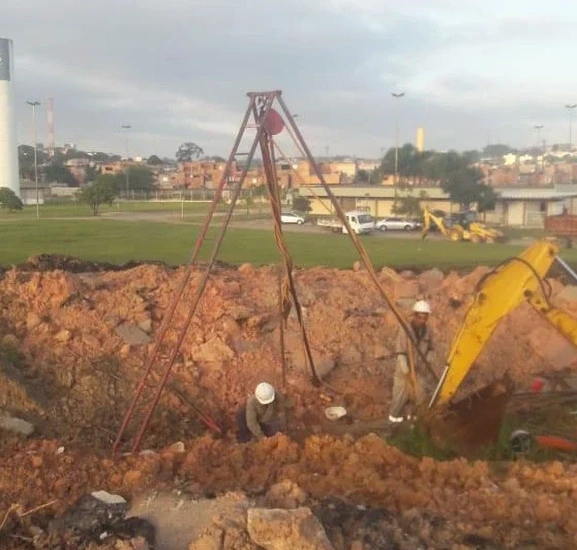
Local geotechnical conditions in Surprise Arizona
The most expensive mistake we see in Surprise is a builder who skips Atterberg limits testing because the site looked 'sandy enough' during a walkthrough. Then the first monsoon cycle hits the foundation, and the fine-grained matrix—maybe only 15 percent of the total mass—swells enough to lift a corner of the slab. Cracks appear. Doors stop closing. The repair bill can run five figures on a new build. The risk isn't just in the obvious clay layers; it's in the silty washes that cross the northern part of the city, where a PI of just 10 can still drive differential movement if the moisture content fluctuates seasonally. We run the test because a 50-gram soil sample processed through the Casagrande cup gives you a defensible number that the geotechnical engineer can use to specify the correct foundation design, whether that's a thickened edge slab or a full basement with waterproofing.
Our services
Our Atterberg limits testing fits into a broader geotechnical investigation. These are the three operations our Surprise clients most often combine with this test.
Foundation Design Support
We carry out the plasticity index and USCS classification directly to your structural engineer for slab-on-grade or post-tensioned foundation design in Surprise's expansive soil zones.
Compaction Control Verification
We test borrow source materials before they reach the site. A material with a PI above 15 typically gets rejected for structural fill under building pads per local geotechnical recommendations.
Forensic Soil Analysis
When a slab in Surprise shows distress, we sample from beneath the foundation to compare current moisture content against the plastic limit and determine if shrink-swell is the root cause.
Common questions
What do Atterberg limits actually tell me about my Surprise building site?
They define the moisture contents at which your fine-grained soil changes behavior. The liquid limit is the water content where the soil flows like a liquid under 25 blows in a Casagrande cup. The plastic limit is where it crumbles when rolled into a 3mm thread. The difference—the plasticity index—tells you how much water the soil can absorb before losing strength. In Surprise's arid climate, a PI above 20 signals a soil that will swell when wetted and shrink when dried, which directly impacts your foundation design.
How much does Atterberg limits testing cost in Surprise?
For a single sample tested for both liquid and plastic limits per ASTM D4318, expect to invest between US$70 and US$100. The exact cost depends on the number of samples in your project and whether we're preparing them from disturbed bag samples or undisturbed Shelby tube specimens. Larger geotechnical investigation programs with multiple borings typically receive a volume discount.
How many soil samples do I need for Atterberg testing on my lot?
For a standard residential lot in Surprise, we recommend at least one sample per distinct soil layer encountered in the boring, and a minimum of two samples per 10 feet of depth. If the boring log shows a clay seam at 4 feet and another at 8 feet, we test both. The IBC requires sufficient testing to characterize the site variability, and Surprise's alluvial geology often shows layering that a single sample would miss.
Can I run Atterberg limits on soil from my own excavation?
You can collect the sample, but the quality of the result depends heavily on how it's handled. We need a representative disturbed sample sealed in a plastic bag to preserve its natural moisture content. If it dries out before reaching our lab, the liquid limit can shift because the clay minerals partially dehydrate. We carry out sampling kits with instructions for contractors working in Surprise who want to take their own samples from test pits. More info.