The nuclear density gauge is the first tool out of the truck here in Surprise. Calibrated to ASTM D6938, it measures compaction on the caliche and sandy subgrades that define the West Valley. We don't guess layer stiffness. We run resilient modulus tests on Shelby tube samples pulled from the exact alignment, then feed those numbers into AASHTOWare Pavement ME. The output is a structural number backed by local material properties. For the I-10 and Loop 303 corridors, we also correlate CBR values from in-situ density tests to validate the upper 300 mm of subgrade before placing the asphalt base course.
A pavement structure in Surprise lives or dies by its subgrade stiffness and binder grade. We measure both.
Technical details of the service in Surprise Arizona
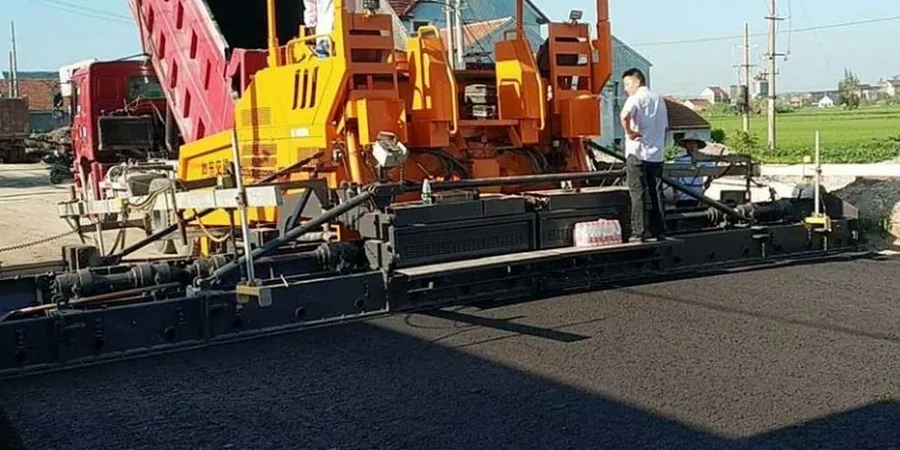
Local geotechnical conditions in Surprise Arizona
Surprise built out fast. The original agricultural land southeast of White Tank Mountain was graded with silty sand and pockets of expansive clay. We've pulled cores on Bell Road where the subgrade swelled 40 mm after a monsoon cycle. The pavement failed at the base course interface. A standard section wouldn't catch that. Our pre-design investigation maps the plasticity index across the alignment. If the PI exceeds 15, we treat the subgrade with lime or cement stabilization before calculating the structural number. We also check the capillary rise potential. In the Dysart Road corridor, we've seen groundwater wick into the aggregate base from irrigation overspray. That saturation cuts the base modulus in half. We design the drainage layer and the cross-slope to eject that water. It's not in the standard spec. It's just what works here.
Our services
Our pavement work in Surprise covers the full chain from subgrade to surface. We don't sub out the critical tests.
Subgrade Soil Survey
We map the CBR and resilient modulus every 100 ft along the centerline. Plasticity, gradation, and sulfate content tested in-house.
Pavement Structural Design
Layer thicknesses and moduli per AASHTO 1993 and MEPDG. We output the SN, ESAL projections, and life-cycle cost analysis.
Asphalt Mix Verification
Marshall or Superpave gyratory compaction. Binder content, air voids, VMA, and tensile strength ratio per ASTM D4867.
Compaction Quality Control
Nuclear gauge and sand cone testing during base and asphalt placement. Real-time density reports for the contractor.
Common questions
What does a flexible pavement design cost for a residential street in Surprise?
For a typical residential collector up to 1,500 linear feet, the design and testing package runs between US$1,560 and US$4,640. The range depends on the number of borings, traffic projections, and whether we need to treat expansive subgrade.
Why does Surprise need a different asphalt binder than Phoenix?
The nighttime lows in Surprise drop faster than in central Phoenix. We see wider thermal strain cycles. A PG 70-10 binder works for many Phoenix streets, but in Surprise we often jump to PG 76-16 to handle the daily temperature range without cracking.
How deep do you check the subgrade for a flexible pavement?
We sample to at least 1 meter below the subgrade elevation. If we find caliche or expansive clay within that zone, we extend the boring until we hit clean granular material or bedrock. The structural design depends on the weakest layer in that profile.
Do you use the AASHTO 1993 method or the newer MEPDG?
We run both. The AASHTO 1993 method gives us the baseline structural number that Maricopa County reviewers expect. The MEPDG (AASHTOWare) lets us predict rutting, fatigue cracking, and thermal cracking for the specific Surprise climate data. We deliver the design with both outputs. More info.