The first thing the drilling crew pulls out of the barrel in Surprise is almost always the same: a sticky, reddish-brown clay with layers of caliche nodules that rattle against the Shelby tube. Our lab receives these tubes straight from the site—usually from depths between 25 and 45 feet along the Loop 303 corridor—and immediately logs the recovery ratio before extrusion. When a contractor plans a tunnel through the basin fill deposits of the West Valley, the real question is not just strength; it is time-dependent deformation. We run consolidated-undrained triaxial tests on undisturbed specimens trimmed from those tubes, measuring pore pressure response under back-pressure saturation. For preliminary alignment studies, we often pair the undisturbed sampling with a CPT test to catch thin sand lenses that a boring might miss. Each sample is photographed, waxed, and tracked through our chain of custody until the final report is signed.
Stiff clay in the hand doesn't mean stiff clay under sustained load—that's what the consolidation curve tells us.
Technical details of the service in Surprise Arizona
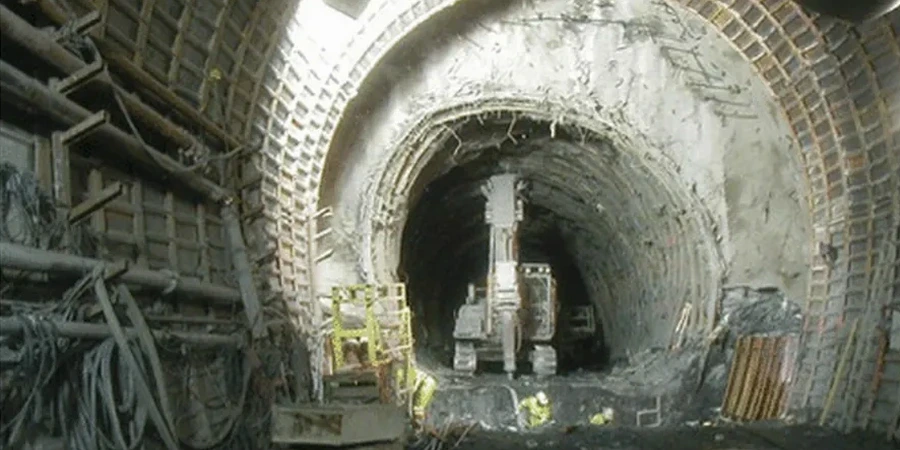
Local geotechnical conditions in Surprise Arizona
In Surprise, we often see contractors surprised by the stiffness contrast between the caliche-cemented layers and the soft clay matrix they sit within. A TBM that advances smoothly through a cemented zone can suddenly lose face pressure when it hits an uncemented pocket, leading to over-excavation and settlement at the surface. The bigger operational risk is time: consolidation settlements under tunnel invert loads continue for months after ring installation if drainage paths are not properly characterized. We have pulled extruded samples that looked intact in the Shelby tube but slumped within minutes when exposed to air—a clear sign of suction-dependent strength that will be lost once the excavation relieves negative pore pressure. Without a lab-measured effective stress path, the designer is guessing at the long-term lining loads. The sulfate values we report also matter: sulfate-resistant cement type V is often specified in our recommendations when concentrations exceed 500 ppm.
Our services
Our Surprise lab handles two categories of testing for soft-ground tunnel projects. Everything starts with intact sample recovery and proceeds through index and performance testing.
Tunnel soil characterization package
Includes visual logging, moisture content, Atterberg limits, grain size analysis, and consolidated-undrained triaxial with pore pressure measurement. We carry out effective stress parameters (c', phi') and undrained shear strength profiles for each tunnel alignment segment.
Consolidation and sulfate assessment
One-dimensional oedometer tests at multiple load increments to define Cc, Cr, and preconsolidation pressure. Water samples are tested for pH and sulfate ion concentration to inform cement type selection per ACI 318 requirements for buried concrete.
Common questions
What lab tests are mandatory before boring a tunnel in Surprise's basin fill clays?
At minimum we run Atterberg limits, natural moisture content, and unconfined compression on every sample. For design-level work we add consolidated-undrained triaxial with pore pressure measurement and one-dimensional consolidation. The IBC requires enough testing to establish the shear strength profile and groundwater conditions along the full alignment.
How long does a full tunnel soils testing program take in the lab?
Index tests can turn around in 3 to 5 business days. Consolidation tests need about 7 to 10 days because each load increment must reach primary completion. Triaxial with back-pressure saturation may take 10 to 14 days. We schedule staging so that index results feed the design team while performance tests run in parallel.
What is the typical cost range for a tunnel geotechnical lab program in Surprise?
Depending on the number of borings and the test suite, most tunnel projects in the West Valley fall between US$4,560 and US$15,350. A short pedestrian tunnel with four borings runs toward the lower end; a full TBM alignment with consolidation and triaxial on every sample reaches the upper range.